

Sea Stars
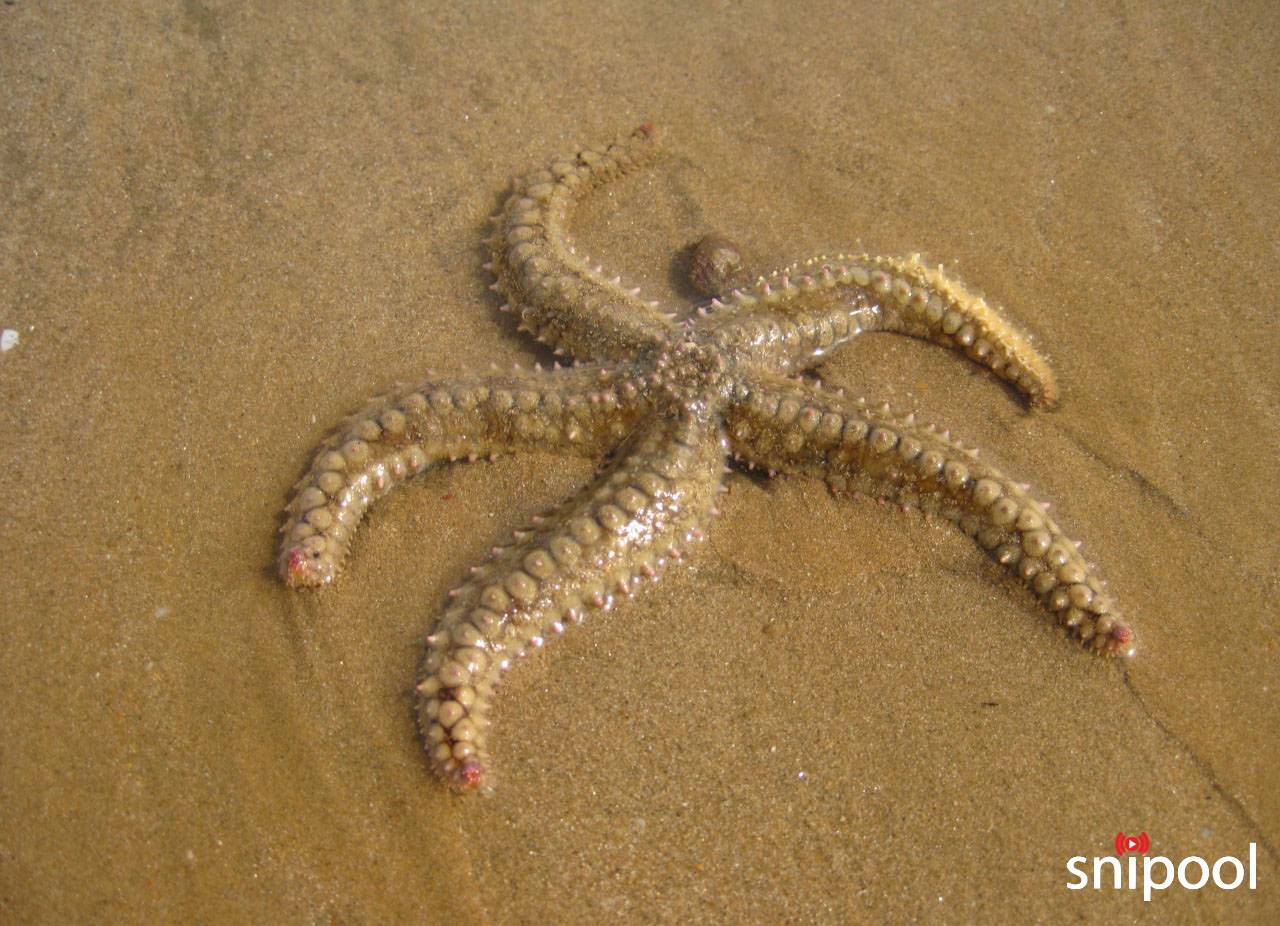
More than 1,500 species of sea stars are known worldwide, inhabiting almost all oceans and seas. They first appeared around 480 million years ago and are among the most ancient marine creatures still living today.
One of the best-known species is the common sea star, which can be brown, red, or violet in color. It is found along the coasts of the Atlantic Ocean. The common sea star is a carnivorous species that mainly feeds on mussels.
Sea stars move very slowly, which is why they typically prey on mussels attached to hard surfaces. With their five arms, which can reach up to 26 cm in length, they grip the mussel and apply steady pressure until the shell opens.
What Is a Sea Star?
Despite its name, a sea star is not a fish. It belongs to the group of echinoderms — marine invertebrates that live on the ocean floor. Their bodies usually display radial symmetry and most commonly have five arms, although some species have more.
Sea stars have a hard internal skeleton made of calcium plates beneath their skin and hundreds of tiny tube feet that help them move and cling to surfaces.
Feeding and Hunting Strategy
The sea star is a predator. Its primary food source includes mussels, clams, oysters, and other mollusks. Because it moves slowly, it targets prey that is firmly attached to rocks or other surfaces.
After wrapping its arms around a mussel, the sea star applies constant pressure until the shell slightly opens.
Interesting fact: A sea star can extend its stomach outside its body and digest its prey externally inside the shell before pulling the stomach back in.
This remarkable feeding method allows it to consume prey efficiently without teeth.
Habitat and Distribution
Sea stars are found in nearly all oceans and seas, from shallow coastal waters to deep-sea environments. They prefer rocky shores, coral reefs, and sandy seabeds where food is accessible.
The common sea star found in the Atlantic Ocean is one of the most recognizable species along European coastlines.
Regeneration Ability
One of the most fascinating features of sea stars is their ability to regenerate. If a sea star loses an arm due to a predator attack, it can gradually regrow it. In some species, even a single detached arm can develop into an entirely new individual.
This ability significantly increases their survival rate in marine ecosystems.
Ecological Importance
Sea stars play a crucial role in marine ecosystems. As predators, they regulate populations of mussels and other shellfish, helping maintain ecological balance.
Their presence is often considered an indicator of a healthy marine environment and stable coastal ecosystems.
