

The Capybara
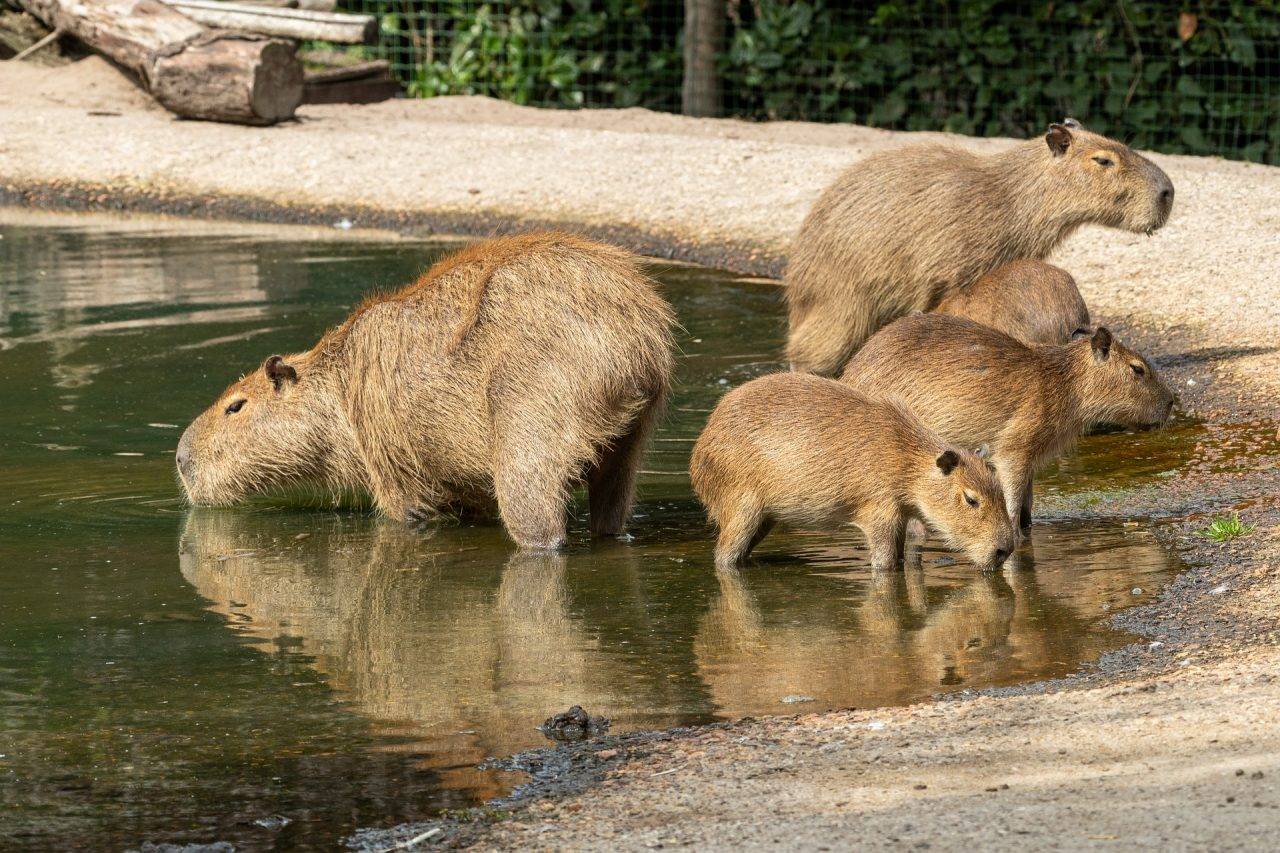
The capybara is the largest rodent on Earth and lives in South America. It feeds on aquatic plants and is an excellent swimmer. A capybara can grow over 1 meter in body length and weigh more than 50 kilograms. On land it moves relatively slowly, but in water it is agile and confident. It lives in small groups close to water sources. Unlike many other rodents, the capybara does not dig complex underground burrows but prefers natural shelters. In the wild, it lives between 8 and 10 years.
Habitat and Lifestyle
The capybara inhabits tropical and subtropical regions of South America, most commonly near rivers, lakes, marshes, and wetlands. It is a semi-aquatic animal and almost always chooses habitats close to water.
Water plays a vital role in its survival. It helps regulate body temperature in hot climates and provides protection from predators. When threatened, the capybara quickly submerges itself, leaving only its eyes and nostrils above the surface.
Size and Physical Characteristics
The capybara is a large herbivorous mammal with a sturdy body and short but strong legs. Its fur is short and coarse, usually brownish in color, helping it blend naturally into its surroundings.
Its eyes, ears, and nostrils are positioned high on its head, allowing it to stay almost completely underwater while still observing potential danger. It also has partially webbed feet, which make it a powerful and efficient swimmer.
Diet and Feeding Habits of the Capybara
The capybara is a herbivore and feeds mainly on grasses, aquatic plants, and various types of leafy vegetation. Occasionally, it may consume tree bark or fruit.
It spends many hours grazing, especially during the cooler parts of the day, such as early morning and late afternoon. Its digestive system is specially adapted to break down cellulose from plant material.
Interesting fact: Capybaras sometimes eat part of their own droppings to maximize nutrient absorption from plant-based food. This natural process helps them fully digest tough plant fibers.
Social Behavior
Capybaras are highly social animals. They live in groups that usually consist of 10 to 20 individuals. Group living increases their chances of survival by improving awareness of predators.
They communicate through whistles, short barking sounds, and soft purring noises. Their social structure is essential for protection in environments where predators such as jaguars and caimans are present.
Reproduction and Lifespan
Female capybaras give birth to several young after a relatively long gestation period. The newborns are well developed, covered in fur, and able to follow the group shortly after birth.
In the wild, the capybara typically lives between 8 and 10 years, depending on environmental conditions and predator pressure.
Role in the Ecosystem
The capybara plays an important role in the wetland ecosystems of South America. As a herbivorous mammal, it helps control vegetation growth and maintain ecological balance. At the same time, it serves as prey for larger predators, making it a vital part of the food chain.
Its calm temperament and strong social bonds make it one of the most recognizable and fascinating animals in South America.
