The Château de Malmaison, France
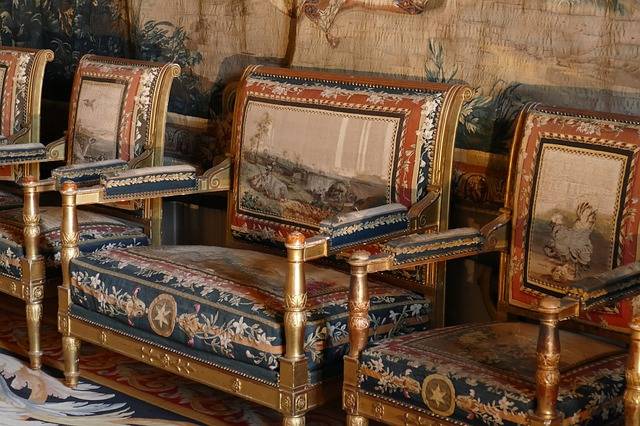
The Château de Malmaison is located less than 10 km from the French capital, Paris. It lies in the Hauts-de-Seine department, in the Île-de-France region.
The Bonaparte couple settled in the château in 1799 after purchasing it.
The residence was built around 1610 and was first expanded in 1686. The two wings of the building were added in 1780.
Written sources dating back to 1244 refer to a “mala domus,” meaning “bad house.” At that time, the area where the château now stands was known for attacks by Norman invaders and bandits who terrorized the region.
A century and a half later, Guillaume Goudet, sergeant-at-arms to King Charles VI, acquired the land. In 1763, the son of Chancellor d’Aguesseau became the new owner. In 1771, the estate passed again into new hands, this time to the wealthy banker Jacques-Jean Le Couteulx du Molay, who hosted prominent figures of the time there with his wife.
The French Revolution forced them to sell the château. The new owner became Joséphine, the wife of Napoleon and future Empress, who purchased the estate in 1799 for 325,000 francs. From that moment, Joséphine continually expanded the property. The estate grew from 260 to 726 hectares, incorporating the neighboring Château de Bois-Préau.
Malmaison became a popular meeting place for high society. Gatherings, balls, theatrical performances, games, and walks in the park were regularly organized there. Joséphine had a passion for nature and rare plants. She entrusted the architect-decorator Berthault with the creation of a garden featuring a grotto, a river, and a Temple of Love.
The Empress succeeded in gathering nearly 250 species of roses in her garden. Rare animals such as kangaroos, black swans, and antelopes could also be seen there. The greenhouse sheltered exotic plants, while aviaries housed exotic birds.
The château’s dining room was decorated in Pompeian style in 1800 by Fontaine. The eight dancers adorning the walls were painted by Louis Lafitte based on designs by Percier.
After her divorce in 1809, Joséphine retired to the Château de Malmaison, where she died in 1814. Her son, Prince Eugène, inherited the estate, but after his death, it was divided into several parts. Damaged during the war of 1870, the estate was reduced to only 6 hectares.
In 1896, the famous patron Iffla, known as Osiris, purchased and restored the estate. Later, he donated it to the French state, which transformed the property into a museum in 1905.