Construction and History
The construction of Park Güell began in 1900 in Barcelona, Spain. At that time, the city was already modern and dynamic, with over 500,000 inhabitants. Barcelona was also a city of artists and architecture. One of its most famous architects was Antoni Gaudí. Eusebi Güell commissioned him to carry out his project: the creation of a residential area for wealthy families. For this reason, Güell purchased a plot of land above Barcelona, offering views of the city and the sea. However, the park’s construction became too expensive, and Güell had to halt the project in 1914. In 1922, the city of Barcelona bought the property from Güell’s heirs, and in 1926, the park was opened to the public.
Main Entrance
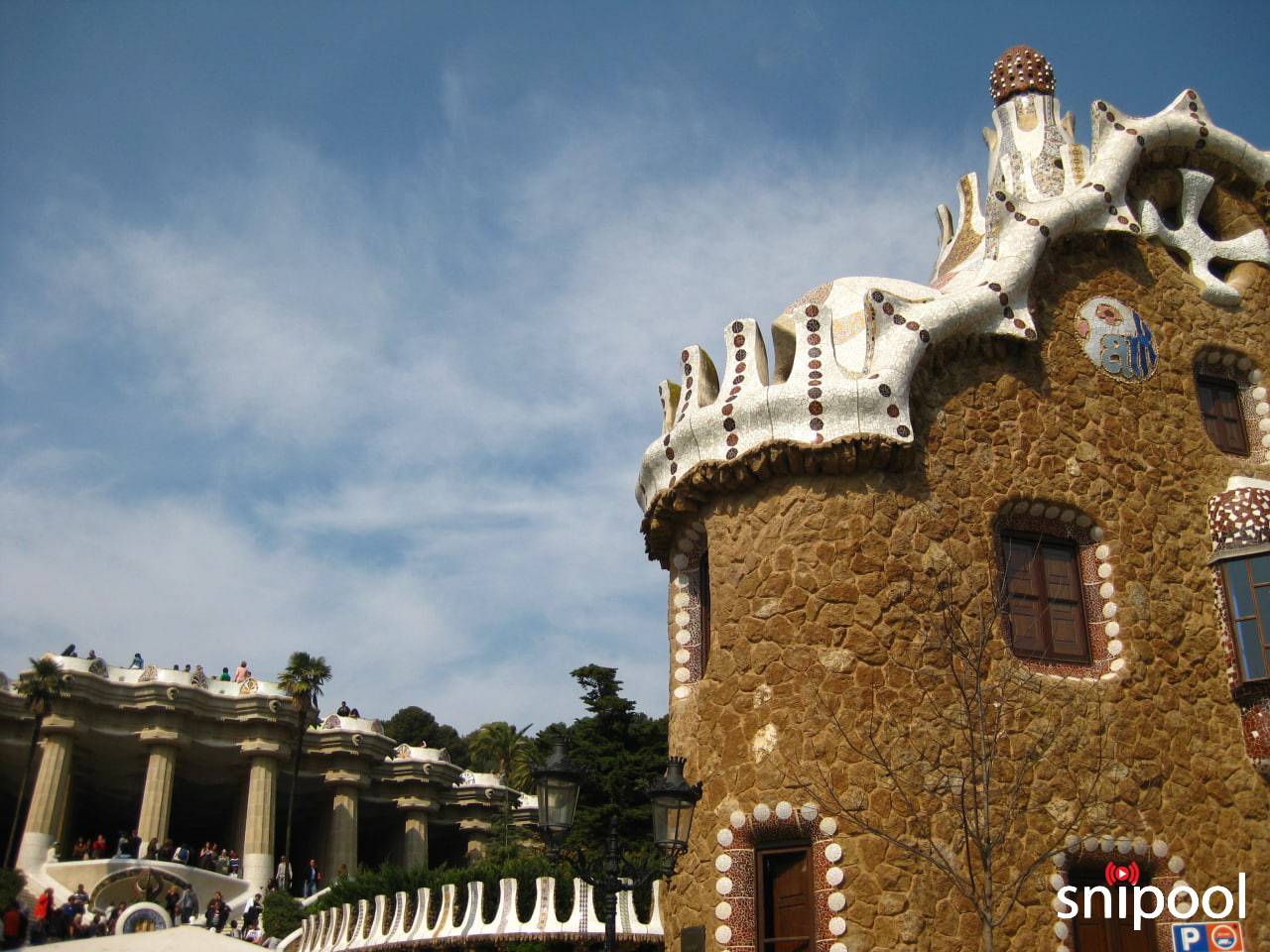
The main entrance is located on Carrer d’Olot and features iron gates. It is flanked by two pavilions that formed the reception area of the planned residential zone.
Casa del Guarda (Guardian’s House)
The guardian’s residence is located to the right of the main entrance. Built between 1901 and 1903, it originally served as the house for the park’s caretaker.
Monumental Staircase
The monumental staircase, framed by two convex walls, starts at the entrance plaza. It is a double staircase, divided into sections, leading up to the Hypostyle Hall (Sala Hipóstila).
Hypostyle Hall (Sala Hipóstila)
Exterior: A covered space with 86 fluted columns, inspired by the Greek Doric order.
Interior: Designed as a covered area that could serve as a market for the residential zone.
Jardí d’Àustria (Austrian Garden)
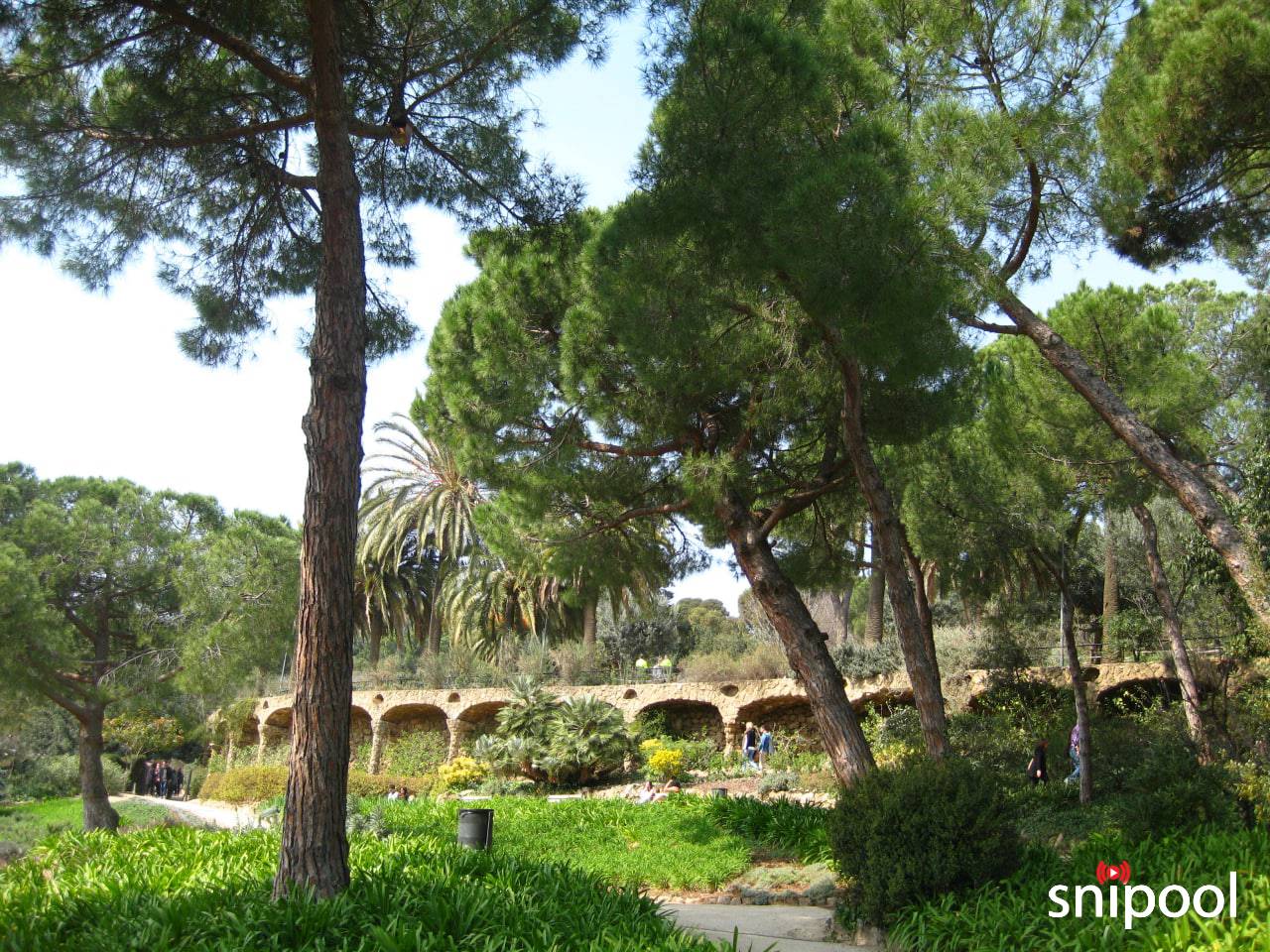
This area was intended for plots where residents’ houses would be built. When the park became public in 1926, it was transformed into a municipal plant nursery.
Plaça de la Natura (Nature Square)
Formerly known as the Greek Theatre or Nature Theatre, the square was intended for open-air performances. The plaza is partially carved into the hill and partially supported by the Hypostyle Hall.
Portico of the Washerwoman (Pórtico de la Lavandera)
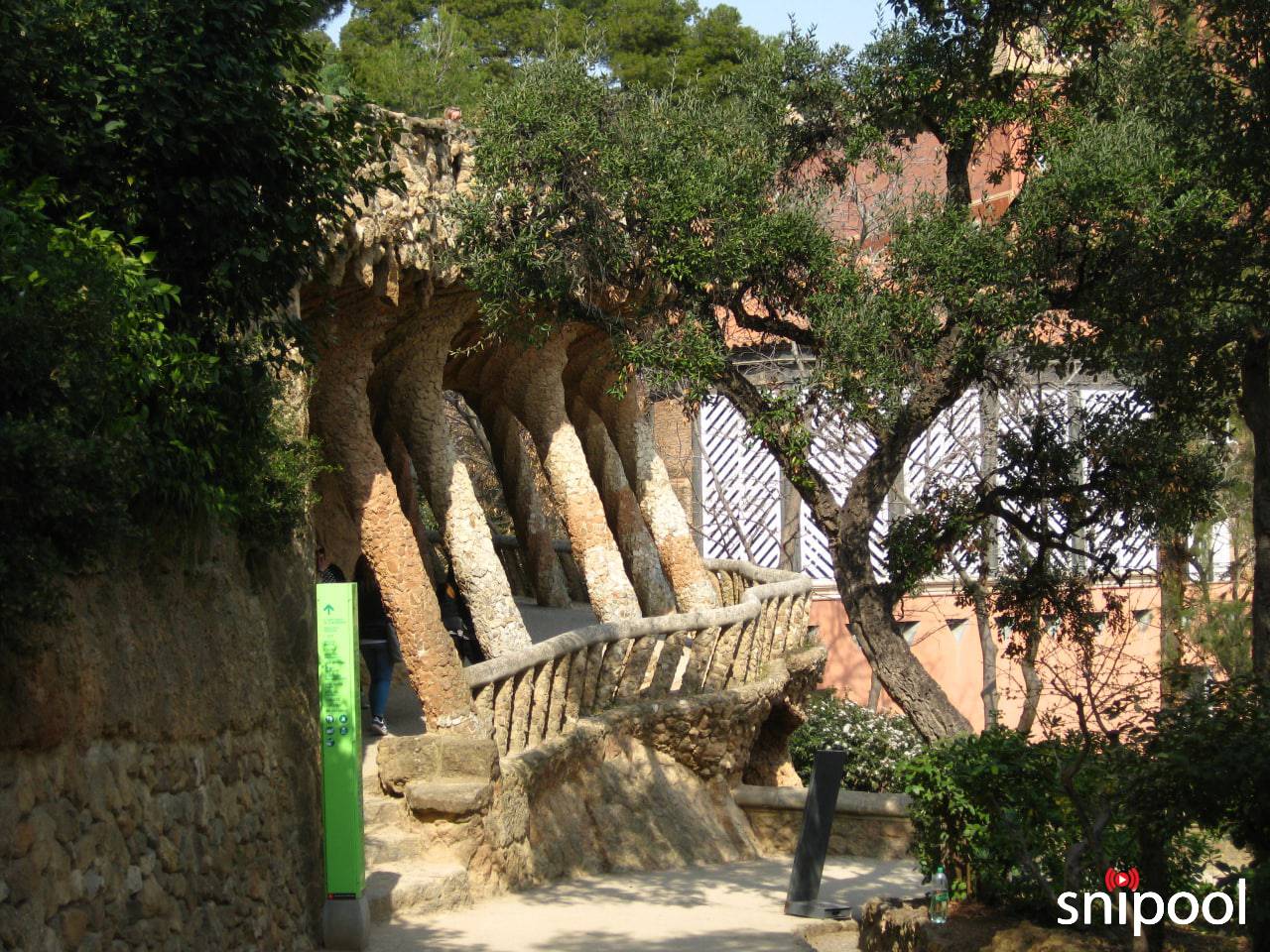
The portico, built against the retaining wall of the upper path, was made from unfinished stone. Outside, several buttresses are visible, one of which represents a caryatid (a stone statue of a woman supporting a cornice) known as “the Washerwoman.”
Ramp and Casa Larrard
The Portico of the Washerwoman ends in a spiral ramp with helical columns. The Casa Larrard, located below, was originally built in a classical style, but Gaudí modified it slightly to serve as a residence for Eusebi Güell and his family.
UNESCO World Heritage
In 1984, Park Güell was inscribed as a UNESCO World Heritage Site, representing Gaudí’s unique architectural style and Barcelona’s creative construction heritage.