François Boucher and Chinese Art
In the 18th century, Europe was fascinated by China, a distant country that was still little known to Europeans. Chinese objects, particularly porcelain, silk and lacquerware, had been imported into Europe for several centuries. This country had witnessed the rise of powerful dynasties, fought epic wars and been the birthplace of a very distinctive art that reflected the whole of Chinese culture: literature, music, painting and architecture.
Ceramics have been produced in China since the Neolithic period. Sculpture is inspired by the country’s mythology. Calligraphy is often combined with drawing. Porcelain and ceramics, whose manufacturing process remained a mystery to the outside world for a long time, were used to create highly refined and finely decorated objects. Chinese painting uses ink and different colours, according to a variety of techniques and styles. Silk painting, meanwhile, uses silk scrolls as its support.
Europe was amazed by silk painting, as well as by decorative porcelain objects. A genuine fashion developed across the Old Continent, consisting of searching for, buying and collecting Chinese works of art in order to create remarkable private collections. In the 18th century, objects decorated using the lacquer technique became highly fashionable and were exported to Europe. The French painter François Boucher was among the European artists fascinated by Chinese art.
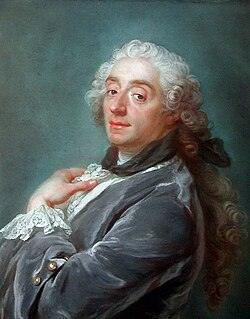
Born in Paris in 1703, François was the only son of Nicolas Boucher, a master painter and draughtsman of the Académie de Saint-Luc. The young boy was sent to study under François Lemoyne (1688–1737), the King’s First Painter, one of the great decorative artists of his time and one of the leading representatives of the Rococo style.
After a few months, during which he created decorative paintings and mythological scenes, François worked in the engraving workshop of Jean-François Cars, where he produced works inspired by those of Watteau.
Before reaching the age of 25, Boucher travelled to Rome to continue his training, where he had the opportunity to study the works of the great Italian artists. Upon returning to Paris, François entered aristocratic social circles thanks to his talent as a painter.
In 1765, he was appointed First Painter to the King and director of the Royal Academy of Painting and Sculpture.
He married one of his models, Marie-Jeanne Buseau, who was known for her beauty in Paris. The couple had three children.
The painter died in 1770.
During his lifetime, François Boucher created a very large number of works. He painted religious scenes, landscapes, portraits, subjects from antiquity and animals. He created several paintings featuring the King’s favourite, Madame de Pompadour, who greatly admired the artist. Boucher was the author of numerous tapestries, wallpapers, sketches, decorative designs and ceramics, and in 1742 he created sketches inspired by Chinese art for the second series of Chinese tapestries. He also designed cartoons for the royal tapestry manufactory of Beauvais and that of the Gobelins.
He left behind an important collection of art objects and shells. La Toilette, which belongs to the second series of Chinese tapestries, is among Boucher’s most famous works.
Image credit (to place at the end of the article): Image: François Boucher, La Toilette (c. 1742). Source: Wikimedia Commons. Public Domain.